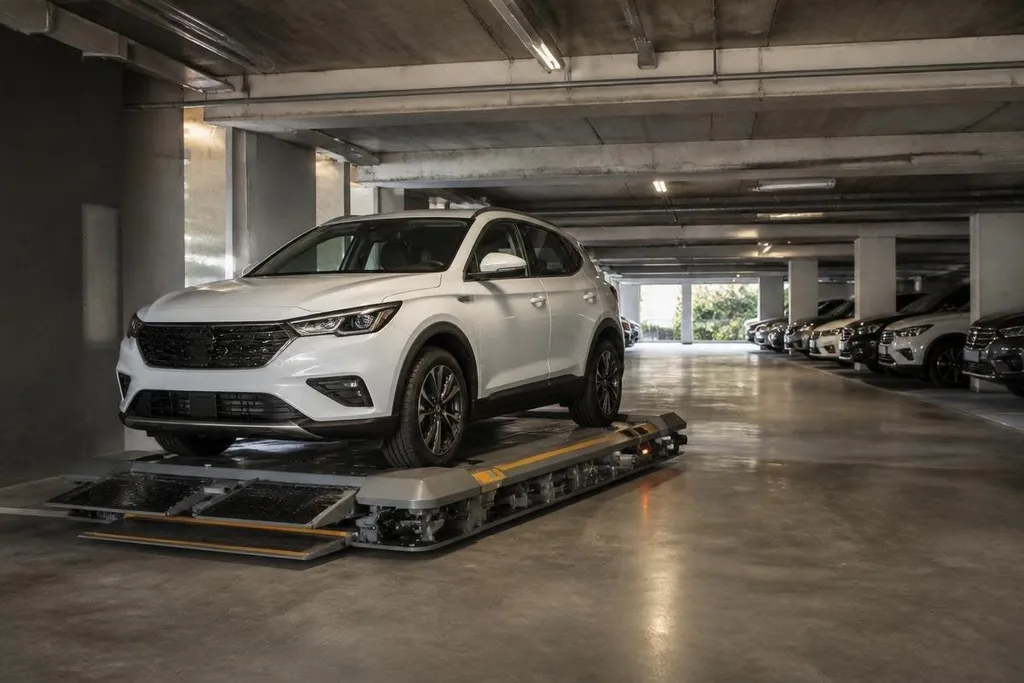
A parking robot takes a car after the driver leaves it at a handover point, then moves the vehicle to an open space. That removes the slowest part of many garage visits: circling while looking for a place to stop.
- The driver leaves the car at a marked bay.
- Sensors and software choose a free space.
- The system returns the car to a pickup area when requested.
How the system moves a car
A parking robot can work in two main ways. A vehicle may move onto a mobile platform, which lifts or carries it. In another design, a low robot moves under the tires and shifts the car without a person inside.
The garage needs cameras, floor markers, laser sensors, or another way to track cars and open spaces. The control software then assigns each vehicle a location and sends movement commands to the robot. A human controls the car only up to the handover point.
That changes the driver’s task. They no longer need to search each level, judge narrow spaces, or walk through the garage after parking. The time gain comes from removing those steps, not from making the robot move quickly.
Where the time saving comes from
A full garage creates wasted movement. People may pass several occupied rows before finding an open space, then repeat the search on another level. A parking robot can store cars in spaces that people may avoid because they are tight, far from the lift, or hard to reach safely.
The system can also place cars closer together if its equipment controls the position of each vehicle. That may let a garage hold more cars in the same floor area, but the result depends on the robot design, the building layout, and the space needed for equipment.
Pickup time still matters. If the robot needs to move several cars before reaching yours, the wait can shift from the parking search to the collection queue. A useful system must show an honest wait estimate and keep that estimate close to the real result.
A parking robot’s wait estimate needs more than a screen promise. When you read Robot24.com, look for the garage, robot model, collection time, and test date before treating that number as useful.
The limits inside a real garage
A parking robot needs a known vehicle shape, a clear handover area, and reliable power. A roof box, trailer hitch, low bumper, or car that exceeds the allowed weight may prevent the robot from working safely.
The garage also needs a plan for faults. If a sensor stops reporting, a car blocks a route, or the building loses power, staff must know how to stop the system and recover the vehicle.
Fire access, emergency exits, drainage, lighting, and walking routes still need human design. Weather can add another problem when the handover point sits outside. Rain, ice, poor lighting, or dirt on a camera may affect the sensors, so these details belong in the site test before an operator promises shorter visits.
The strongest opposing view is that a well-run conventional garage may already offer quick parking at a lower cost. I’d choose a parking robot only where land is tight, demand is high, or the layout makes ordinary parking slow.
A practical check before buying or building
Use this list when you compare a parking robot proposal with a normal garage system:
- Measure the handover queue: record how many cars wait at busy arrival and pickup periods.
- Check vehicle limits: list maximum length, width, height, wheelbase, and weight.
- Test fault recovery: ask staff to stop a robot, clear a blocked route, and return a car safely.
- Count extra equipment: include lifts, charging points, sensors, barriers, software, and building work.
- Set a time target: define the full visit from arrival at the entrance to car pickup.
- Ask for site evidence: request results from a garage with similar traffic and building limits.
Those checks keep the comparison tied to the driver’s whole visit. A robot that parks quickly but creates a long pickup line has moved the delay rather than removed it.
The first useful trial should measure arrival time, storage time, pickup time, faults, and staff workload across busy periods. Until a system can publish those figures for a real garage, its promise remains a design claim rather than a time saving you can plan around.